Stump grinding
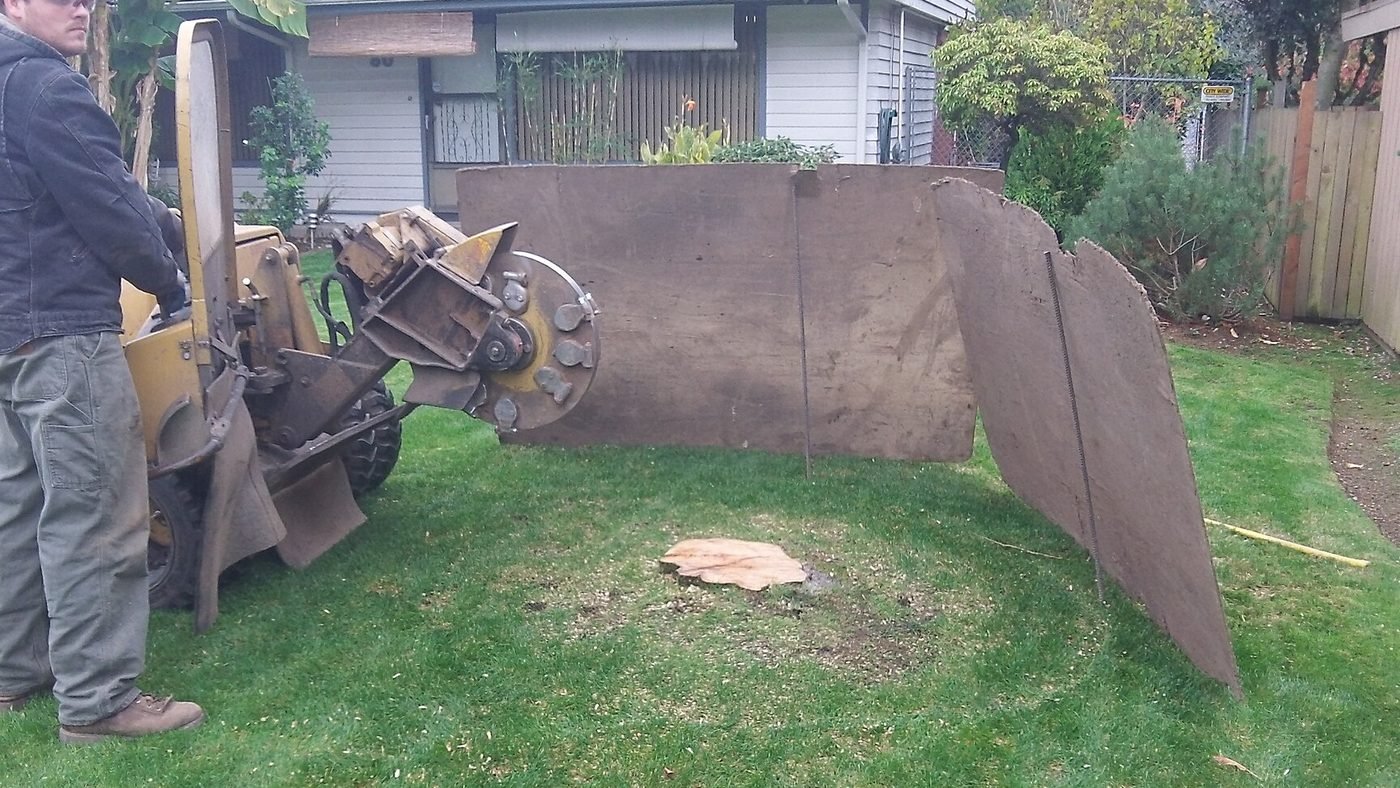
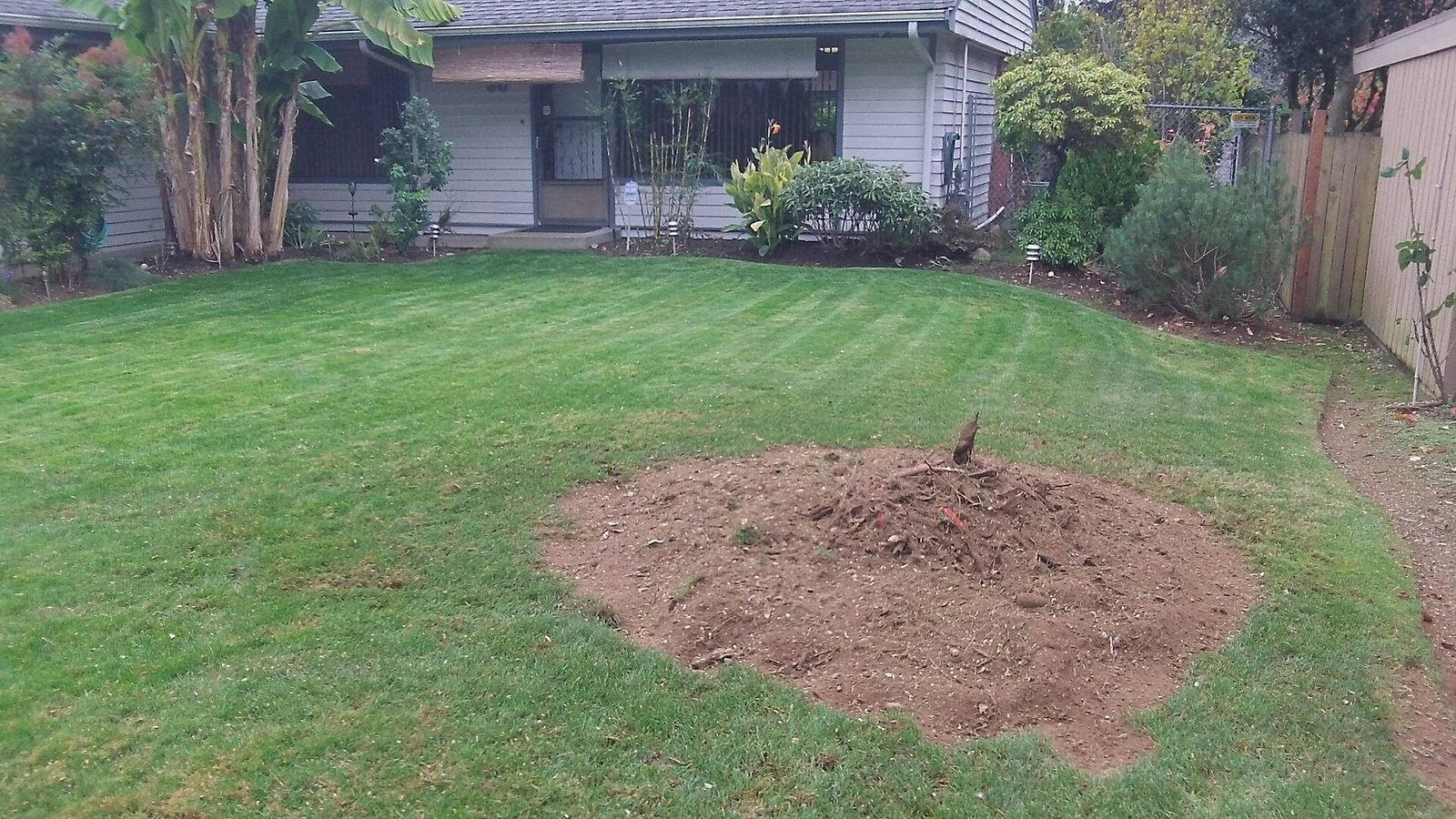
Stump cut to grade, ground 6 to 8 inches down, chips raked and the hole leveled. The standard job, and what most yards need.
Most common →We cut the stump to grade, grind it 6 to 8 inches below the surface, and rake the hole level so you can mow straight over it. Chips stay as mulch or get hauled off, your call. Free estimate, firm price before we start.
Three fields. We call you back with a price, usually the same day.
Four jobs, one machine, one crew. If it is wood below the grass line, it is our work.
Stump cut to grade, ground 6 to 8 inches down, chips raked and the hole leveled. The standard job, and what most yards need.
Most common →When the whole root ball has to leave: replanting a tree, pouring a patio, running a fence, or a stump that has heaved the concrete.
Full extraction →Roots pushing through the lawn or lifting the driveway, ground flush with grade so the mower and the snow shovel stop catching.
Flush to grade →Keep the grindings for mulch, or we haul them off and bring in screened topsoil. Quoted separately so you only pay for what you want.
Optional add-on →Same words on both quotes, very different job. Here is the honest difference so you can pick before you call.
| Stump grinding | Stump removal | |
|---|---|---|
| What happens | The stump and the top of the root flare are ground into chips, 6 to 8 inches below grade. | The stump and root ball are dug or pulled out, leaving a wide hole. |
| Best for | Mowing, curb appeal, most removals after a tree comes down. | Replanting in the same spot, patios, fence posts, additions, stump heaving concrete. |
| Roots | Left in the ground and left to decay. | Main roots pulled, the rest still stay in the soil. |
| Yard after | Level spot, grindings raked back in, ready for you to seed or sod. | Large hole that needs fill and settling before you plant or pave. |
| Cost | Lower, and it is the right call most of the time. | Higher, more equipment and more cleanup. |
| Time | Usually under an hour per stump. | Half a day or more depending on size and access. |
Stump work is quoted per stump, not per hour, so the number does not move while we are on site. Size does most of the work, and everything else adjusts around it.
Name, phone and ZIP is all the form asks. We call or email back with two questions about the stump, and a photo if you have one.
Usually the same day, without a site visit. If access is tight or the stump is unusual, we come look at it first, free.
Utility locate done, stump ground to the depth we quoted, grindings raked level, hard surfaces blown off. You walk it with us before we leave.
Not "ground down" with no number attached. You get the depth in inches in writing, so you know whether grass will grow there or a fence post will fit.
Grindings raked level, hole filled, sidewalk and driveway blown off. We do not leave a pile in the yard unless you asked to keep the mulch.
Iowa One Call gets a request at least 48 hours before we grind. Private lines like irrigation and dog fences are your call to flag, and we ask first.
Grinders that fit through a 36 inch gate. Backyards, parkway strips, side yards between houses, and lots with no alley access.
Honest version: a grinder is heavy equipment, the hole will settle, and the lawn is not a golf course when we leave. Here is what is normal and what is not.
Expect them on the approach and around the stump. Plywood goes down on soft or tight routes, and turf recovers in a week or two. Wet ground is the one case where we reschedule.
Grinding throws chips a few feet past the hole. We rake the bulk up and blow off hard surfaces. A light scatter in the grass is normal and disappears with the next mow.
We fill and rake it level, then it drops an inch or two over the first season. That is ground wood breaking down, not a bad fill job. Top it off before seeding.
We leave it graded and ready. Seeding is yours, and on a deep grind you may need extra soil first. We tell you the depth so you know what you are working with.
Honest version: a grinder is heavy equipment, the hole will settle, and the lawn is not a golf course when we leave. Here is what is normal and what is not.
Expect them on the approach and around the stump. Turf recovers in a week or two, and wet ground is the one case where we reschedule rather than chew up a yard. Wet ground is the one case where we reschedule.
Grinding throws chips a few feet past the hole. We rake the bulk up and blow off hard surfaces. A light scatter in the grass is normal and disappears with the next mow.
We fill and rake it level, then it drops an inch or two over the first season. That is ground wood breaking down, not a bad fill job. Top it off before seeding.
We leave it graded and ready. Seeding is yours, and on a deep grind you may need extra soil first. We tell you the depth so you know what you are working with.
The grind, the finish, and the mess that comes with it. One visit, one crew.
We grind in Polk, Dallas, Warren and the surrounding counties. If you are inside the metro, we come to you. Every city in the metro has its own page with local detail.
These are the metro communities we cover. Outside this list, ask anyway. If it is a short drive from the metro, we can usually work it into a route.
Most companies price by the diameter of the stump at the base, how many stumps are on the property, how easy the grinder gets to them, and how deep you want it ground. A 10 inch ornamental stump and a 40 inch oak are not the same job, which is why a per stump number beats a flat hourly rate.
We quote per stump and give you a firm number before we start. Send your ZIP and a photo with something for scale, and you will have a price, usually the same day.
Size, yes. Diameter at the ground drives time and machine wear, and a stump twice as wide holds far more than twice the wood. Species only changes how long the machine is on site, and your quote is per stump, so there is no discount for a dead ash and no surcharge for a fresh oak. The number we give you is the number you pay.
It does not matter for the quote. We price the stump by diameter and access, not by species, so you never need to identify the tree to get a number. If we need to know for depth or regrowth, we can usually tell from the bark, the wood grain, the color of the cut, the suckers, and what is growing next door. A stump that has been sitting for years is sometimes too far gone to name, and it still grinds the same way.
No. Grinding takes the stump down 6 to 8 inches below grade and turns it into chips. Removal pulls the stump and root ball out and leaves a hole that has to be filled with soil. Grinding is cheaper, less disruptive, and what most yards actually need. Removal is for when you are replanting in the same spot, pouring concrete, or setting a fence post.
Six to eight inches below grade is the standard, and it is enough to backfill with soil and grow grass. If you are replanting a tree in the same spot, setting a fence post, or the stump keeps sprouting, we grind deeper. The depth goes on your quote in inches, not “ground down.”
No. We leave the hole filled and raked level with the surrounding grade, ready for you to seed or sod. Seed is a small job: rake it loose, spread seed, add straw, water it for a couple of weeks. Ask us for the depth we ground to, because if it is deeper than about six inches you will want another inch or two of soil on top first.
The grindings go back in the hole and get tamped and raked level. Loose chips on the lawn get raked into a pile or into the hole, and the driveway, sidewalk and patio get blown off. If you want the grindings hauled away and clean topsoil brought in, that is the backfill add-on and it is quoted separately.
Expect a clean hole raked level, a ring of disturbed soil around it, and tire or track marks on the approach. A stump grinder is a heavy machine on soft ground. We keep the machine on the driveway or the gravel where we can, but you should expect some marks in the turf. Lawns recover in a week or two, and wet spring ground is the case where we would rather reschedule than leave ruts.
Yes, and you should plan on it. Ground wood and soil keep settling for a season, usually an inch or two, sometimes more on a big stump. Top it off with a bag or two of soil before you seed, and check it again the next spring. It is normal, not a defect, and it is the reason we do not promise a finished lawn.
Yes, and that is usually the right call. Grinding shreds the wood the borer larvae live in, and processed ash material is not a practical way for emerald ash borer to spread once it is broken down to chips. University of Wisconsin extension guidance treats ash ground to about an inch as processed and no longer a risk. The chips are fine as mulch in a bed. If you would rather not have them in the yard, hauling is a cheap add-on.
The stump will not regrow once it is ground below grade. Some species can push shoots from the roots for a season or two, and in central Iowa that usually means willow, cottonwood, elm, and tree of heaven. If you have one of those, tell us before the job. We grind deeper and go over your options, which may include a stump killer applied by you after we leave.
Roots stop growing once the stump is gone. They decay in place, which in Iowa soil can take several years for dense species like oak and elm. While they decay they can still hold a slight hump in the lawn or a bump the mower catches, and surface root grinding fixes that.
We request an Iowa One Call locate at least 48 hours before grinding, which marks public lines like gas, electric, water and fiber. Private lines are not marked by 811: irrigation, dog fences, landscape lighting, and a gas line to a grill or a shed. Tell us where those run, or flag them yourself, and we hand dig around them.
Usually, yes. Our compact grinders fit through a 36 inch gate, which covers most residential side yards. Tell us the gate width and whether there is a step or a slope, and we will confirm before the day of the job. If the gate is narrower, we will tell you what it takes instead of showing up and turning around.
Yes, as long as the ground is not frozen solid. Frost is the only real limiter. Late fall and mild winter days are good grinding weather because the yard is not in use and the chips clean up easily.
Free estimates across the Des Moines metro, most jobs scheduled within the week. No deposit, no pressure, no upsell for a stump you do not need to touch.
Three fields. Takes about 15 seconds.