Silver maple
The big one. Wide root flare, soft wood, often 36 to 48 inches at the base even when the trunk looks smaller from the street. Grinds fast for its size, and the roots keep a hump in the lawn for years.
Indianola is the Warren County seat, with a courthouse square, Simpson College, and one of the oldest tree canopies outside Des Moines. Silver maple and elm stumps here are frequently 36 to 48 inches across.
Three fields. We call you back with a price, usually the same day.
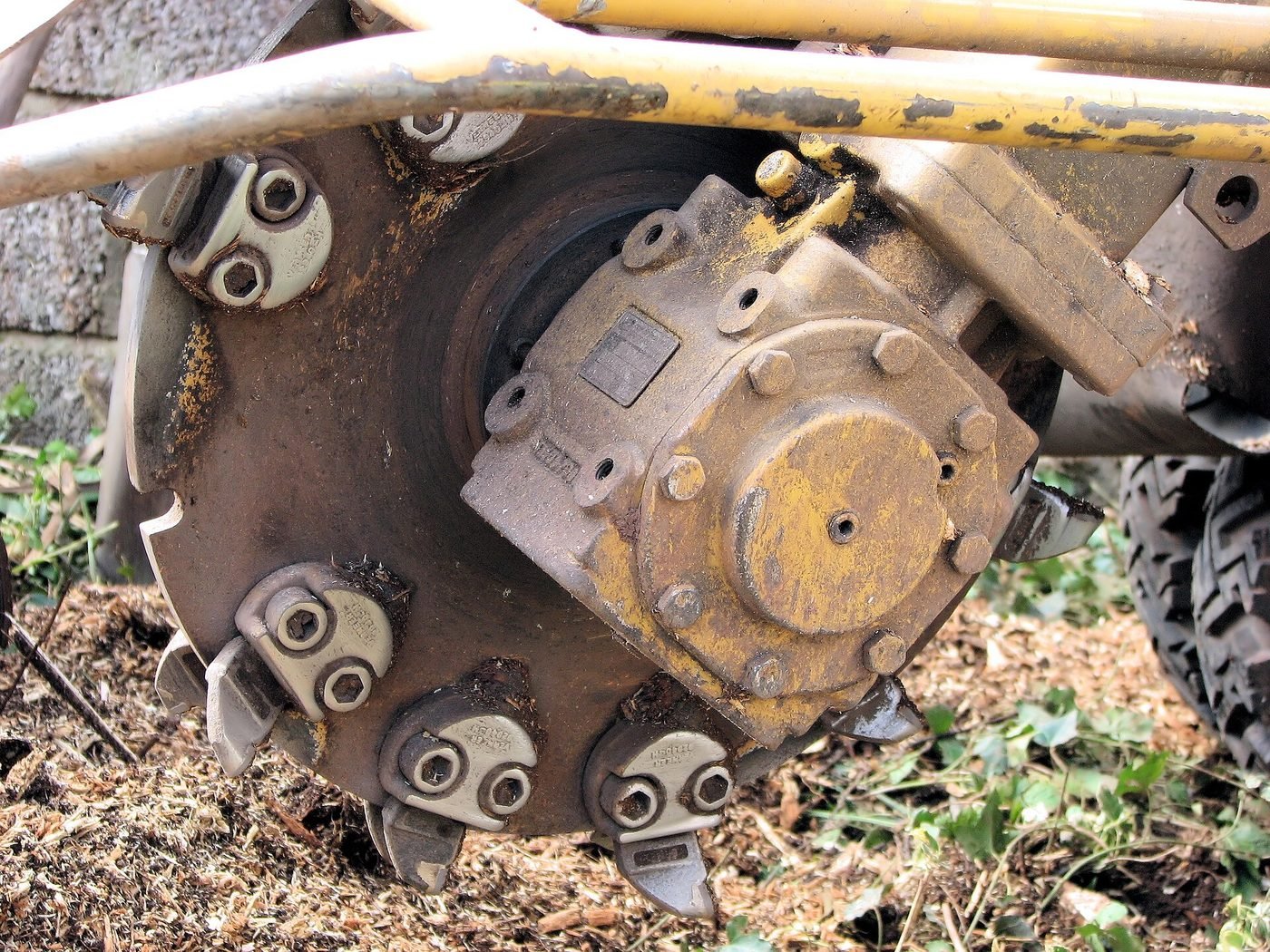
The older blocks around the square and the college have big trees close to sidewalks and foundations. That is careful work, and it is where a compact grinder and a patient operator earn their keep.
We grind 6 to 8 inches below grade as standard, deeper if you are replanting or setting a post. Grindings go back in the hole and get raked level, and the driveway gets blown off before we leave.
Stumps near a sidewalk or a foundation get worked in passes with the wheel kept clear. We tell you before we start if a root has lifted a panel or cracked a wall.
| Indianola stump profile | What it means for your job |
|---|---|
| Housing era | 1850s to 1950s around the square and the college, newer growth on the edges |
| Common species | Silver maple, green ash, black walnut, American elm |
| Typical stump | 30 to 48 inches on the old blocks, 10 to 24 inches on the edges |
| Access | Sidewalks, foundations, mature fences, narrow alleys |
Species matters more than people expect: it decides how hard the wood is, how wide the base spreads, and how long the roots sit in the ground before they rot.
The big one. Wide root flare, soft wood, often 36 to 48 inches at the base even when the trunk looks smaller from the street. Grinds fast for its size, and the roots keep a hump in the lawn for years.
Abundant across the metro and dying off. Ash goes punky in the center a year or two after the tree comes down, which grinds easily. The grindings can stay on site, the borer does not survive the grinding.
Hard, dark wood and a wide flare. Slower going than maple, and the chips should not go straight into a bed you plan to plant.
Dense wood and deep roots. Slower to grind and slow to rot, which matters if you plan to plant over the same spot.
Diameter at the base is the number that drives time, chips and equipment. Measure across the widest point where the trunk meets the ground, not the height.
| Stump size | What it usually takes | Worth knowing |
|---|---|---|
| Under 12 in | Mostly ornamental and builder stumps. 15 to 30 minutes, half a wheelbarrow of chips. | Cheapest per stump, especially several in one yard. |
| 12 to 24 in | The most common residential stump in the metro. 30 to 45 minutes, about one wheelbarrow. | Standard 6 to 8 inch grind, grass comes back over it. |
| 24 to 36 in | Mature yard trees. 45 to 90 minutes, two to three wheelbarrows. | Ask about hauling if the chips would sit in view. |
| 36 in and up, or multi-stem | Old silver maple, elm, walnut, and multi-trunk ornamentals. One to three hours, three or more barrow loads. | Depth matters here. Replanting or setting a post means grinding deeper. |
Cut to grade, ground 6 to 8 inches down, grindings raked level so you can mow over it.
The standard job →Whole root ball out, for replanting, a patio, a fence post, or a stump that has lifted the concrete.
Full extraction →Surface roots ground flush where they cross the lawn, the driveway, or the sidewalk.
Flush to grade →Leave the grindings as mulch, or have them hauled off and screened topsoil brought in.
Optional add-on →Honest version: a grinder is heavy equipment, the hole will settle, and the lawn is not a golf course when we leave. Here is what is normal and what is not.
Expect them on the approach and around the stump. Turf recovers in a week or two, and wet ground is the one case where we reschedule rather than chew up a yard. Wet ground is the one case where we reschedule.
Grinding throws chips a few feet past the hole. We rake the bulk up and blow off hard surfaces. A light scatter in the grass is normal and disappears with the next mow.
We fill and rake it level, then it drops an inch or two over the first season. That is ground wood breaking down, not a bad fill job. Top it off before seeding.
We leave it graded and ready. Seeding is yours, and on a deep grind you may need extra soil first. We tell you the depth so you know what you are working with.
Irrigation, dog fence, landscape lighting, and a gas line to a grill or shed are not marked by 811. Point them out, or mark them yourself, before we start.
Hoses, toys, planters, the grill, and the dog. A grinder throws chips and does not stop for a hose reel.
36 inches is the number that decides which machine shows up. Tell us the width, and whether there is a step or a slope.
Chips travel. If the stump is near the drive, park on the street that morning and we will leave the concrete clean.
Recent shapes of work. Swap these for real photos and job notes once the operator is on board.
| Neighborhood | Stump | What we did |
|---|---|---|
| Near the square | 40 in silver maple, side yard | Ground 8 in, chips hauled |
| Simpson area | 34 in elm | Ground 10 in, hole filled and leveled |
| Off Highway 92 | 18 in ash | Ground 6 in, mulch left on site |
Yes, the wheel works from the stump outward and does not need to travel over the panel. If a root has already lifted the sidewalk, grinding the surface roots will not put it back, and we will say so rather than sell you a fix that does not work.
Yes. It is a 25 minute drive from the metro and we route it with Norwalk and Carlisle. Winter grinding is fine as long as the ground is not frozen solid.
It does not matter for the quote. We price the stump by diameter and access, not by species, so you never need to identify the tree to get a number. If we need the species for depth or regrowth, we can usually tell from the bark, the wood grain, the color of the cut, the suckers, and what is growing nearby. A stump that has been down for years is sometimes too far gone to name, and it still grinds the same way.
Yes, some, and we would rather tell you now than surprise you. A stump grinder is a heavy machine on soft ground, so expect track or tire marks on the approach, a ring of disturbed soil around the hole, and chips thrown a few feet onto the lawn. We keep the machine on the driveway or the gravel where we can, and we tell you before we start if the ground is too soft to work. Turf recovers in a week or two. Wet spring ground is the case where we reschedule instead of leaving ruts.
It will, and you should plan for it. Ground wood and soil keep settling for a season, usually an inch or two and more on a big stump. Top it off with a bag or two of soil before you seed, then check it again the next spring. That settling is normal, it is why we do not promise a finished lawn, and it is the one follow up on a stump job worth doing.
No. We leave the hole filled and raked level with the surrounding grade, ready for you to seed or sod. Seed is a small job: rake it loose, spread seed, add straw, water it for a couple of weeks. Ask us the depth we ground to, because if it is deeper than about six inches you will want another inch or two of soil on top first.
Yes, size is the biggest factor. Diameter at ground level decides how much wood the wheel has to remove, and a stump twice as wide holds far more than twice the wood. Species only changes how long the machine runs, and your quote is per stump, so there is no discount for a dead ash and no surcharge for a live oak. The number we give you is the number you pay.
Free estimate, firm price, most jobs scheduled within the week. Send your ZIP and we will have questions and a number for you today.
Three fields. Takes about 15 seconds.